


Article: How to Clean Brass Jewelry Safely: A Complete Tarnish, Care and Storage Guide
How to Clean Brass Jewelry Safely: A Complete Tarnish, Care and Storage Guide
Brass jewelry can develop character over time, but it also needs thoughtful care.
The safest way to clean brass jewelry is to begin with a soft microfiber cloth. If the piece is confirmed to be plain, unplated brass with no pearls, gemstones, enamel, glued details or delicate finishes, you can use a lightly damp cloth with a small amount of mild soap, then dry it immediately.
However, not all brass jewelry should be cleaned the same way.
A brass ring with flash gold plating, a gemstone setting, pearl detail, enamel surface or mother-of-pearl inlay needs much gentler handling than a plain hammered brass band. Strong DIY methods that use lemon, vinegar, salt, baking soda, toothpaste or abrasive polishing pastes may brighten bare brass, but they can also damage plating, dull enamel, affect porous gemstones or leave residue around settings.
The safest rule: Treat jewelry as a mixed-material piece unless you know it is plain, unplated brass with no delicate components.
This guide explains how to clean brass jewelry at home, remove tarnish safely, care for plated brass, prevent oxidation and store brass rings, necklaces, earrings and bracelets correctly.
Executive Summary
Brass is a copper-zinc alloy. Over time, it can darken, dull or develop surface changes through contact with air, moisture, skin oils, cosmetics, perfume and household chemicals.
For most brass fashion jewelry, a soft dry microfiber cloth is the right everyday tool.
Use mild soap and lukewarm water only for confirmed bare brass jewelry with no plating, pearl, gemstone, enamel or delicate setting. Do not soak mixed-material jewelry. Avoid acidic or abrasive DIY cleaning methods unless a product-specific care guide confirms they are appropriate.
Gold-plated brass should never be treated like plain brass. The aim is to protect the plating, not polish through it.
TL;DR
- Start with a dry microfiber cloth.
- Use a damp cloth with mild soap only for confirmed plain, unplated brass.
- Never assume plated brass can be cleaned like bare brass.
- Avoid lemon, vinegar, baking soda, salt, toothpaste, bleach and abrasive cleaners on JEMFYRD jewelry.
- Keep brass jewelry away from water, perfume, lotion, sunscreen, sweat, chlorine and household cleaners.
- Wipe jewelry after wear and store pieces separately in a dry place.
- Tarnish is different from worn plating.
- Stop cleaning if a stone loosens, enamel chips, plating lifts or the brass develops an unusual green or rough surface change.
What Is Brass Jewelry?
Brass is an alloy primarily made from copper and zinc. It is valued in jewelry for its warm golden tone, versatility and ability to be shaped into textured, sculptural and statement designs.
Because brass contains copper, it may naturally react with air, moisture, oils and products that touch the skin. This can create a darker, duller or more aged finish over time.
That does not always mean the jewelry is damaged. Surface tarnish is common with brass. The correct response depends on the design of the piece.
Brass Jewelry Comes in More Than One Form
Before cleaning, identify which category your piece belongs to.
| Jewelry Type | Safe Default Care |
|---|---|
| Plain brass with no coating or stones | Dry cloth first; mild soap and damp cloth only when needed |
| Flash-gold-plated brass | Dry microfiber cloth; minimal moisture only |
| Brass with gemstone details | Dry cloth; avoid soaking and harsh cleaners |
| Brass with pearl or mother-of-pearl | Dry cloth or barely damp cloth; dry immediately |
| Brass with enamel | Dry cloth; avoid scrubbing and abrasive methods |
| Brass with glued or delicate settings | Dry cloth only unless product guidance says otherwise |
| Adjustable brass ring | Clean gently and avoid repeatedly bending the band |
How to Clean Brass Jewelry Safely at Home
The safest method is the no-soak method.
It removes everyday skin oils, dust and product residue while limiting risk to plating, stones, enamel and settings.
What You Need
- One soft microfiber cloth
- One clean, dry lint-free cloth
- Lukewarm water
- A tiny amount of mild soap
- A soft cotton swab for detailed areas, if necessary
Do not use rough paper towels, abrasive kitchen sponges, toothbrushes with firm bristles, metal polish, toothpaste or household cleaning sprays.
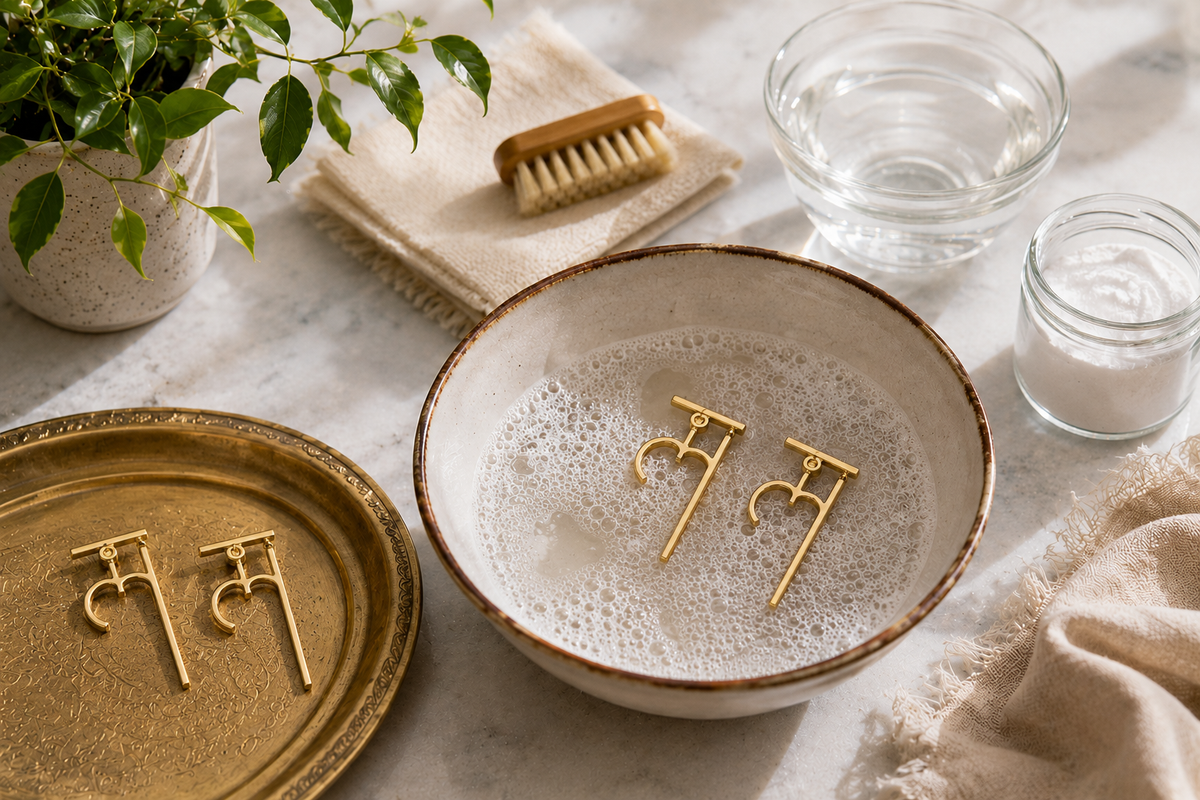
Step-by-Step: The No-Soak Method
- Lay the jewelry on a clean, soft towel.
- Wipe the entire piece with a dry microfiber cloth.
- Check whether the surface dirt has lifted.
- If residue remains and the piece is confirmed plain brass, dampen one corner of the cloth with lukewarm water and a tiny amount of mild soap.
- Wipe gently without saturating the jewelry.
- Use a lightly damp cotton swab for narrow areas, only if needed.
- Wipe away any soap residue with a separate lightly damp cloth.
- Dry the piece immediately and thoroughly with a clean cloth.
- Leave the jewelry in open air until fully dry before storing.
This approach is safer than soaking because it reduces prolonged moisture exposure around clasps, stones, metal joints and decorative details.
Can You Soak Brass Jewelry in Water?
For JEMFYRD jewelry, soaking is not the recommended default.
A plain, unplated brass piece may tolerate brief contact with mild soapy water. But many fashion jewelry pieces combine metal with plating, enamel, gemstones, pearl, mother-of-pearl, adhesive or delicate settings.
Soaking can create unnecessary risk, especially when you do not know the complete construction of the piece.
How to Remove Tarnish From Brass Jewelry
Tarnish is a surface change that can make brass look darker, less reflective or uneven in color.
Before trying to remove tarnish, ask one question:
Is this truly bare brass, or does it have plating, stones, pearl, enamel or another decorative finish?
If It Is Plain, Unplated Brass
Start with the no-soak mild-soap method.
If the brass still looks dull after cleaning, use a soft untreated jewelry cloth and light pressure. Work slowly and stop if the cloth changes the surface unevenly.
For significant discoloration, deep oxidation or rough texture, seek product-specific advice rather than escalating to acids or abrasive home remedies.
If It Is Gold-Plated Brass
Do not try to “polish away” discoloration.
Gold-plated brass has a thin surface layer that can wear over time. When the gold color becomes patchy, dull or brass-toned, the issue may be plating wear rather than tarnish.
Aggressive polishing, acidic cleaners and abrasive cloths can remove more of the plated surface.
If the Jewelry Has Gemstones, Pearls or Enamel
Treat it as delicate jewelry.
Use only a soft dry microfiber cloth. Use minimal moisture only when necessary, then dry immediately.
Do not use tarnish-removal hacks around pearl, mother-of-pearl, turquoise, apatite, rough gemstones, enamel or glued settings.
Tarnish vs. Plating Wear: How to Tell the Difference
Tarnish and plating wear require different solutions.
| What You Notice | Likely Cause | What to Do |
|---|---|---|
| Brass looks dull or darker overall | Surface tarnish or residue | Clean gently with dry cloth, then mild soap method if confirmed bare brass |
| Gold color looks patchy | Plating wear | Stop polishing; use gentle wipe-only care |
| Brass tone shows through gold color | Plating has worn thinner | Avoid acids and abrasives; seek support if appearance concerns you |
| Green or blue-green residue appears | Oxidation or reaction with moisture/products | Stop using strong cleaners; wipe gently and seek guidance |
| Stone setting looks dark around edges | Cosmetic or oil buildup | Dry cloth first; do not soak |
| Surface feels rough, cracked or flaky | Finish damage or corrosion | Stop wearing and seek professional advice |
How to Clean Gold-Plated Brass Jewelry
Gold-plated brass requires gentler care than plain brass.
The purpose of cleaning gold-plated jewelry is to remove surface oils and dust without thinning or scratching the plated layer.
Safe Method for Gold-Plated Brass
- Wipe the jewelry with a clean dry microfiber cloth after wear.
- For visible residue, use a barely damp cloth.
- Dry immediately with a separate cloth.
- Store the piece separately in a dry pouch or lined compartment.
Avoid on Gold-Plated Brass
- Lemon juice
- Vinegar
- Baking soda
- Salt
- Toothpaste
- Metal polish
- Silver polish
- Brass polish
- Bleach
- Chlorine
- Alcohol-based cleaning sprays
- Rough cloths
- Abrasive polishing cloths
- Ultrasonic cleaners
- Steam cleaners
How to Clean Brass Rings
Rings need more frequent care because they come into contact with hand cream, soap, water, food, hand sanitizer and daily friction.
Brass Ring Care Routine
- Remove rings before washing hands when practical.
- Take rings off before cleaning, cooking, gardening or exercising.
- Do not wear brass rings in pools, hot tubs or the ocean.
- Wipe rings after wear.
- Avoid resting a gemstone ring face-down on hard surfaces.
- Do not repeatedly bend adjustable bands wider and narrower.
- Check stones and settings after a knock or impact.
For Adjustable Brass Rings
Adjustable rings are designed for modest fit changes, not constant resizing.
Adjust slowly, with gentle pressure. Avoid squeezing the band around hard objects or repeatedly opening and closing it. Repeated bending can weaken metal or affect a stone setting.
How to Clean Brass Necklaces and Chains
Brass necklaces are especially vulnerable to perfume, skincare, sweat and tangling.
Necklace Care Tips
- Put necklaces on after perfume, sunscreen, makeup and hair products have dried.
- Remove necklaces before showering, exercising or sleeping.
- Wipe the chain and pendant after wear.
- Fasten the clasp before storage.
- Store each necklace separately.
- Do not pull knots apart forcefully.
- Keep delicate chains flat when possible.
For brass necklaces with pearl, mother-of-pearl, gemstone or enamel elements, use only the dry microfiber method as your first choice.
How to Clean Brass Earrings
Earrings can collect makeup, skincare and hair-product residue.
Brass Earring Care Tips
- Wipe earring fronts, backs, hooks and posts after wear.
- Store pairs together so they do not scratch each other.
- Keep pearl, gemstone and enamel earrings away from chemicals.
- Do not use cleaning solutions on earrings worn in healing piercings.
- Follow professional piercing aftercare instructions for new piercings.
A soft dry cloth is usually enough for everyday brass earring care.
How to Keep Brass Jewelry From Tarnishing
You cannot stop all tarnish permanently, but you can slow it down significantly.
The Brass Jewelry Prevention Routine
- Put jewelry on last.
- Take jewelry off first.
- Keep jewelry dry.
- Wipe it after every wear.
- Avoid perfume, lotion, sunscreen and hair spray directly on the piece.
- Remove jewelry before swimming, showering and working out.
- Store each piece separately.
- Keep jewelry away from humid bathrooms.
- Avoid mixing brass with sharp or abrasive jewelry in one compartment.
- Do not leave jewelry in direct sunlight, near radiators or in hot cars.
Why Perfume and Moisture Matter
Perfume, lotion, skincare ingredients, sweat, water and household cleaners can build up on brass and speed up surface changes. They may also affect plating, porous stones, pearl and enamel.
The best habit is simple: finish your skincare and fragrance routine first, let products dry, then put on jewelry.
Brass Jewelry Storage Tips
Storage is one of the easiest ways to preserve brass jewelry.
Best Storage Method
- Store each piece in a soft pouch, jewelry compartment or lined box.
- Keep chains fastened.
- Keep rings separate so stones and textured surfaces do not scratch other pieces.
- Store pearl and mother-of-pearl jewelry away from harder gemstones.
- Keep plated pieces from rubbing against watches, bangles or rough metal chains.
- Make sure jewelry is completely dry before putting it away.
- Store jewelry in a cool, dry place rather than a bathroom.
How to Store Brass Necklaces Without Tangling
- Close the clasp.
- Lay the necklace flat.
- Keep the pendant centred.
- Use one pouch or compartment per necklace.
- Avoid piling several chains into the same pouch.
- Use a travel jewelry roll or compartmentalized organizer when packing.
Brass Jewelry Do’s and Don’ts
| Do | Don’t |
|---|---|
| Wipe jewelry after wear | Leave it coated in sweat, perfume or lotion |
| Use a soft microfiber cloth | Use rough paper towels or abrasive sponges |
| Use mild soap only for confirmed plain brass | Soak plated, stone-set, pearl or enamel pieces |
| Store jewelry separately | Toss multiple pieces into one box |
| Remove jewelry before water and exercise | Wear it in pools, showers or hot tubs |
| Check material details before cleaning | Assume all brass jewelry is bare brass |
| Clean gently and stop if uncertain | Scrub harder when discoloration does not lift |
| Seek advice for structural damage | Force loose stones, bent bands or broken clasps |
Common Brass Jewelry Cleaning Mistakes
Using Lemon, Vinegar or Baking Soda on Every Brass Piece
These methods may be recommended for bare household brass, but jewelry can have plating, gemstones, pearls, enamel, coatings or adhesive details.
For mixed-material jewelry, these ingredients are too risky.
Using Toothpaste
Toothpaste is abrasive. It can scratch the surface, dull plated finishes and create uneven shine.
Soaking Jewelry Overnight
Long soaking increases moisture exposure around joints, clasps, settings and decorative elements.
Using a Hard Toothbrush
A stiff brush can scratch brass, wear plated surfaces and catch on delicate settings.
Polishing a Plated Surface Repeatedly
Gold plating can wear thinner with friction. Excessive polishing is not a repair method.
Storing Brass Jewelry in the Bathroom
Bathrooms combine humidity, steam, cosmetics and cleaning products—all of which can speed up surface changes.
Practical Brass Jewelry Care Scenarios
Scenario 1: Plain Hammered Brass Adjustable Ring
A plain brass adjustable ring without plating or stones can usually be cleaned with a dry microfiber cloth. If it has visible residue, use the no-soak mild-soap method and dry it immediately.
Avoid repeated resizing. Adjust once for a comfortable fit, then leave the band alone as much as possible.
Scenario 2: Flash-Gold-Plated Brass Ring With Aquamarine
A flash-gold-plated brass ring with an aquamarine feature should be treated as plated gemstone jewelry.
Use a dry cloth after wear. Do not use acids, polishing paste, soaking, ultrasonic cleaners or steam.
Scenario 3: Pearl or Mother-of-Pearl Brass Earrings
Pearl and mother-of-pearl are more delicate than brass.
Use only a soft dry cloth, avoid perfume and hair products, and store the earrings away from harder gemstones or rough metal surfaces.
Scenario 4: Brass Necklace With a Gemstone Pendant
Clean the chain and pendant gently with a dry microfiber cloth. Keep the necklace dry, fasten the clasp before storage and avoid tangling it with other chains.
How Often Should You Clean Brass Jewelry?
Cleaning frequency should match how often the piece is worn and what it comes into contact with.
| Care Task | Suggested Frequency |
|---|---|
| Dry microfiber wipe | After every wear |
| Quick visual inspection | Every one to two weeks for frequent-wear pieces |
| Gentle damp-cloth cleaning | Only when visible residue appears |
| Check clasp, stones and adjustable band | Monthly |
| Deep cleaning or professional assessment | Only when needed |
Over-cleaning can create more wear than everyday use, especially on plated brass.
When to Stop Cleaning and Seek Help
Stop at-home cleaning when you notice:
- A loose gemstone
- A bent prong or damaged setting
- A clasp that no longer closes securely
- A broken chain link
- Chipped or cracked enamel
- Peeling or lifting plating
- A pearl with a rough, cracked or dull surface
- A strongly bent adjustable ring band
- Deep green or black surface changes that do not lift gently
- Skin irritation alongside visible jewelry damage
A structural or finish issue needs assessment, not stronger cleaner.
Expert Care Insight: The Gentle-First Rule
The most effective jewelry-care habit is not the strongest cleaner. It is the gentlest method that removes the problem without creating a new one.
For brass fashion jewelry, that usually means:
- Wipe after wear.
- Keep it dry.
- Avoid chemicals.
- Store it separately.
- Identify plating and gemstones before cleaning.
- Clean only as much as needed.
This approach protects the finish, color, texture and craftsmanship of a piece over time.