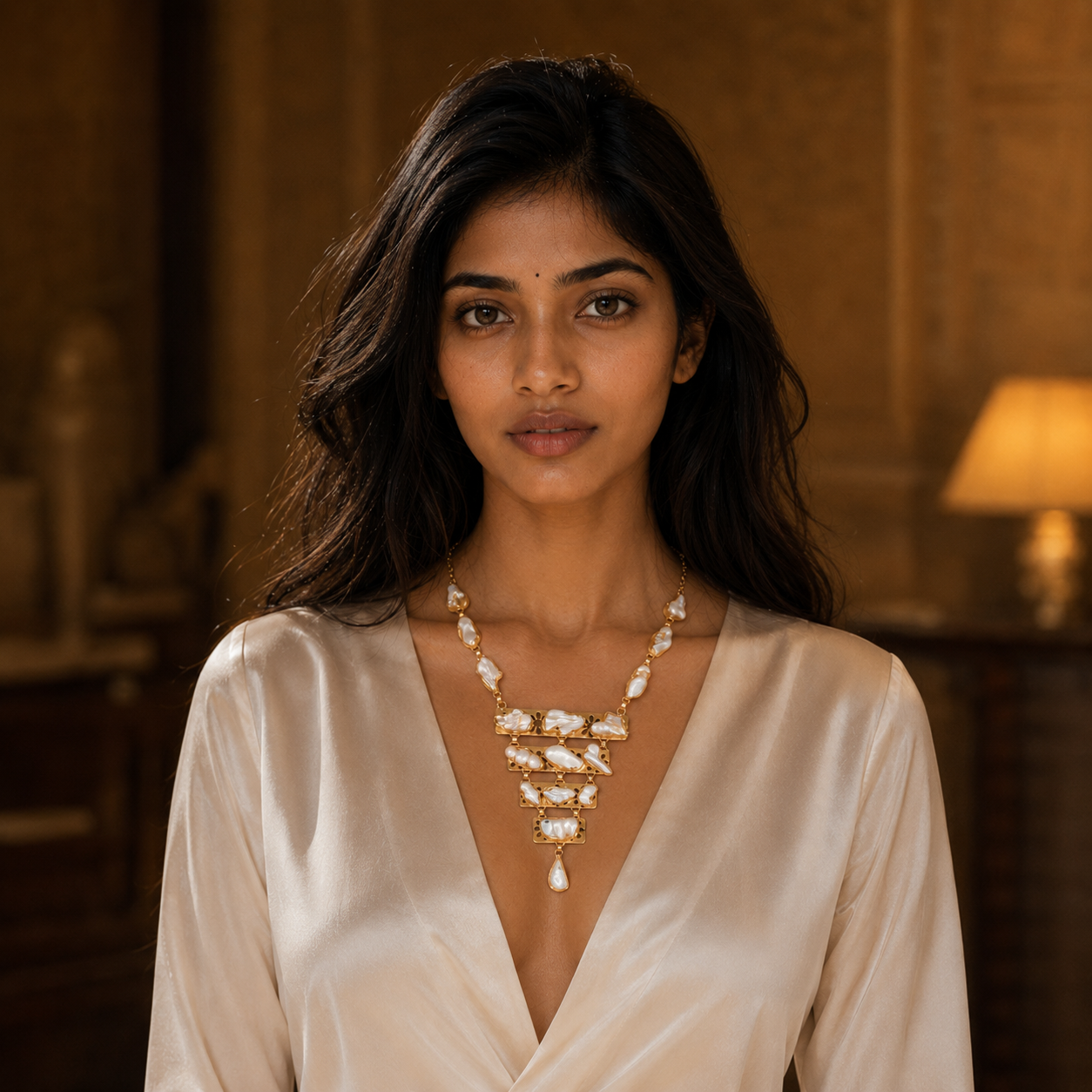
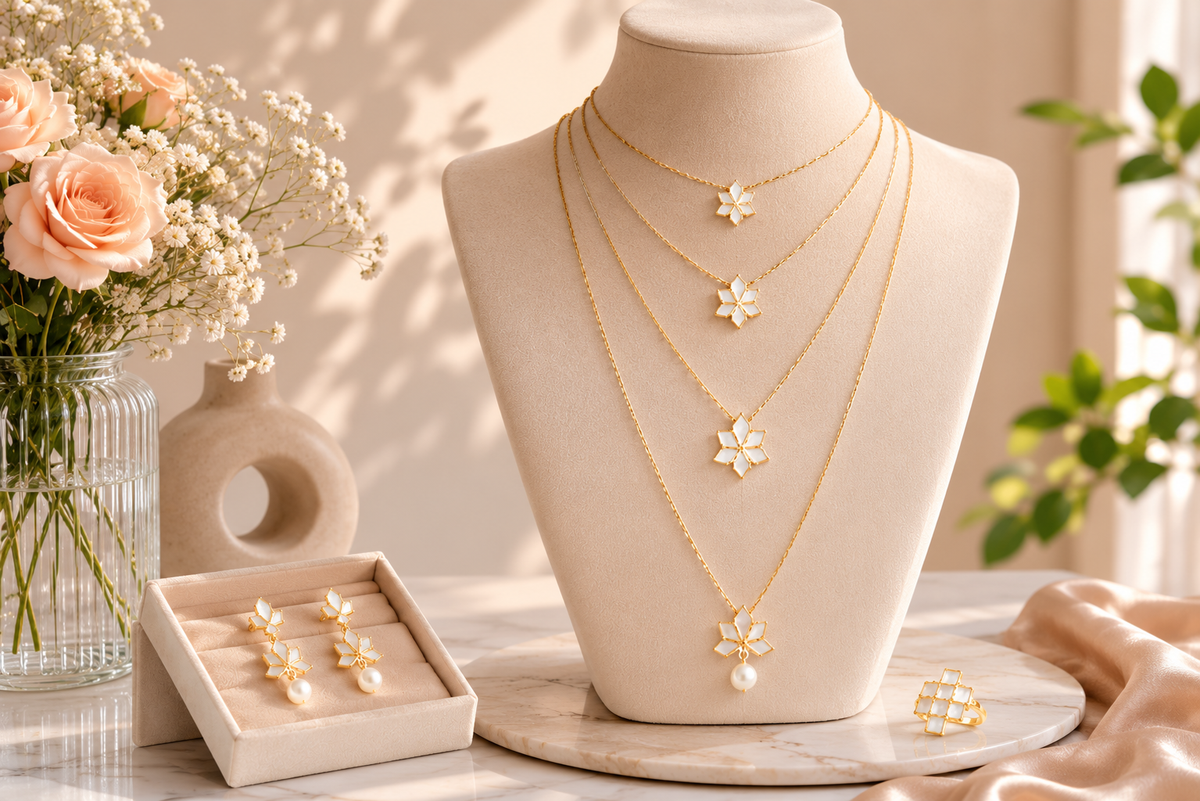
Necklace Lengths Guide: How to Choose the Right Necklace Length
Choosing the right necklace length is one of the easiest ways to make jewellery feel intentional.
A necklace can sit closely around the neck, rest on the collarbone, fall below it with a pendant, or create a longer line over knitwear and occasionwear. The same chain length can also look different from one person to another because neck circumference, height, torso length, posture, pendant size and neckline all affect where it sits.
The simplest rule is this:
Choose a necklace length based on where you want the lowest visible point of the necklace or pendant to fall—not only on the number printed on the product page.
For most women, an 18-inch necklace is a versatile everyday starting point because it typically sits near the collarbone. A 16-inch necklace feels shorter and more neckline-focused. A 20- or 22-inch necklace usually gives a little more space for pendants, higher necklines and layering.
This guide explains standard necklace lengths in inches and centimetres, how they sit on the body, how to measure for the right fit, what works with different necklines, how to layer necklaces without tangling and which length makes the safest gift.
Executive Summary
Necklace length is measured from end to end, including the clasp. Standard lengths commonly range from 14 inches to 36 inches or more.
For everyday styling, 16 to 20 inches covers most needs:
- 16 inches: A short, close-to-the-neck look.
- 18 inches: A classic collarbone length and a versatile starting point.
- 20 inches: A slightly longer, relaxed everyday length.
- 22 inches: A flattering option for pendants, layering and higher necklines.
- 24 inches and above: A stronger styling statement, especially with larger pendants or knitwear.
When choosing a necklace, consider the chain length and pendant together. A pendant can extend the visible drop of a necklace by one inch or more, which changes where it lands on the chest.
For gift buyers, an 18-inch adjustable or extender-chain necklace is often the least risky choice. It is versatile, widely wearable and easy to style with both open and everyday necklines.
TL;DR
- An 18-inch necklace is the most versatile everyday starting point for many women.
- A 16-inch necklace sits closer to the base of the neck and may wear like a choker on some people.
- A 20- to 22-inch necklace gives more room for pendants, high necklines and relaxed styling.
- A pendant changes the visible length of a necklace, so measure the chain and pendant together.
- Necklace names such as choker, princess, matinee and opera are useful style labels, not rigid universal rules.
- Measure a necklace you already love, or use string in front of a mirror to find your preferred visual endpoint.
- For layering, begin with a short chain and leave around two to four inches between each layer.
- For a gift, choose a necklace with an extender or an 18-inch chain unless you know the recipient prefers shorter or longer jewellery.
Necklace Length Chart: Inches, CM and Where Each Length Sits
The chart below is a practical visual reference. Exact placement differs from person to person, so treat it as a starting point rather than a guarantee.
| Necklace Length | Length in CM | Common Style Name | Where It Usually Sits | Best For |
|---|---|---|---|---|
| 14 inches | 35.5 cm | Collar / short choker | High on the neck | Open shoulders, off-shoulder outfits, statement styling |
| 16 inches | 40.5 cm | Choker / short necklace | Base of the neck or above the collarbone | Everyday minimalism, scoop necks, layering base |
| 18 inches | 45.5 cm | Princess length | Around the collarbone | Everyday wear, pendants, gifting, office styling |
| 20 inches | 51 cm | Long princess | Just below the collarbone | Pendants, casual dressing, higher necklines |
| 22 inches | 56 cm | Matinee | Between the collarbone and upper bust | Statement pendants, relaxed silhouettes, layering |
| 24 inches | 61 cm | Long matinee | Near the upper bust | Bold pendants, knitwear, longer proportions |
| 30 inches | 76 cm | Opera | Mid-chest | Eveningwear, high necklines, long vertical lines |
| 36 inches | 91 cm | Opera / rope | Lower chest or below | Double wrapping, dramatic styling, lariats |
| 40 inches and above | 102 cm+ | Rope / lariat | Longest styling range | Knotted, wrapped or layered looks |
Quick answer: An 18-inch necklace usually rests at the collarbone. A 22-inch necklace usually falls lower, between the collarbone and upper bust. A pendant can make the visible endpoint fall even lower.
Why Necklace Length Names Can Be Confusing
Terms such as collar, choker, princess, matinee, opera and rope are useful descriptions, but jewellery brands do not always use the same exact inch ranges.
For that reason, shop by the actual measurement first:
- Check the necklace length in inches or centimetres.
- Check whether the listing includes an extender.
- Consider the pendant’s vertical drop.
- Compare the measurement to a necklace you already enjoy wearing.
- Use product photos as styling inspiration, not as exact body-placement proof.
A necklace marked “choker” may feel comfortably short on one person and quite fitted on another. A 16-inch necklace can sit at the base of the neck on one wearer and closer to the collarbone on another.
Where Should a Necklace Sit?
A necklace should sit where it feels comfortable, looks balanced with your outfit and allows the design to be seen clearly.
There is no universally “correct” placement. The best position depends on the purpose of the necklace.
| Desired Effect | Useful Starting Length |
|---|---|
| Highlight the neck and collarbones | 14–16 inches |
| Wear a delicate everyday chain | 16–18 inches |
| Showcase a small pendant | 18–20 inches |
| Add visual space below a neckline | 20–22 inches |
| Wear a statement pendant | 22–24 inches |
| Style over knitwear or high necklines | 24–36 inches |
| Create drama or wrap a long strand | 30 inches and above |
The more important question is not “What length is fashionable?” but “Where do I want this jewellery to end?”
For example, a fine pendant necklace may look best when the pendant sits just below the collarbone. A larger gemstone pendant may need more space, so it does not compete with the neckline or feel crowded against the throat.
How to Measure Necklace Length at Home
The best necklace length is personal. Measuring at home takes only a few minutes and helps reduce uncertainty before buying online.
Method 1: Measure a Necklace You Already Love
This is the most reliable method when you already own a necklace with a length you enjoy.
What you need
- A flat surface
- A ruler or tape measure
- The necklace you want to compare
Steps
- Open the clasp and lay the necklace flat.
- Straighten the chain gently without pulling it tight.
- Measure from one end of the clasp to the other.
- Record the result in inches or centimetres.
- Note whether the necklace has an extender.
- Check whether it has a pendant and measure the pendant’s vertical drop separately.
This gives you a useful baseline for future purchases.
For example, if your favourite necklace measures 18 inches from clasp to clasp and has a one-inch pendant, the lowest visible point sits closer to a 19-inch visual drop.
Method 2: Use String or a Flexible Measuring Tape
Use this method when you want to test a length directly on your body.
Steps
- Stand in front of a mirror.
- Place a soft measuring tape, string or ribbon around your neck.
- Hold it at the point where you want the chain to sit.
- Mark the meeting point.
- Lay the string flat against a ruler.
- Add extra length if you plan to wear a pendant.
- Recheck the position in the mirror before deciding.
The Pendant-Drop Rule
When choosing a pendant necklace, do not stop measuring at the chain.
A pendant creates its own visual drop. If the pendant is approximately one inch long, the lowest visible point of the necklace will sit about one inch below the chain’s resting point.
Practical tip: Measure to the place where you want the pendant to end, then subtract the pendant’s vertical length to estimate the best chain length.
This is one of the most useful details to remember when buying a pendant online.
How to Choose Necklace Length: A Five-Question Framework
Use this decision framework before choosing a necklace.
1. What is the necklace’s job?
Different lengths serve different purposes.
| Purpose | Good Starting Point |
|---|---|
| Daily minimal chain | 16–18 inches |
| Small pendant | 18–20 inches |
| Meaningful gift necklace | 18 inches with extender |
| Large gemstone pendant | 20–24 inches |
| Pearl or bead statement necklace | 18–22 inches |
| Layering base | 14–16 inches |
| Layering middle piece | 18–20 inches |
| Long statement necklace | 24–30 inches |
| Necklace over clothing | 24–36 inches |
2. What neckline do you wear most?
A necklace should support the neckline rather than crowd it.
3. Is there a pendant?
A pendant affects the visible drop, weight and balance of the necklace.
4. Do you want to layer it?
Layering works best when every chain has enough visual space to be seen.
5. Is this for you or a gift?
For a gift, flexibility matters more. An extender or adjustable fastening can make an 18-inch necklace more versatile.
Necklace Length for Different Necklines
The most flattering necklace is usually one that creates breathing room around the neckline.
| Neckline | Suggested Necklace Length | Why It Works |
|---|---|---|
| V-neck | 18–22 inches | A pendant can echo the vertical shape of the neckline |
| Scoop neck | 16–20 inches | A shorter necklace fills the open space naturally |
| Crew neck | 16 inches or 24 inches+ | Go deliberately short or long rather than competing with the neckline |
| Shirt collar | 16–20 inches | Short chains and pendants sit neatly inside an open collar |
| Boat neck | 14–18 inches | A shorter necklace creates contrast against a wide neckline |
| Strapless | 14–18 inches | Draws attention to the neck and collarbones |
| Off-shoulder | 14–16 inches | Keeps the focus high and balanced |
| Square neck | 16–20 inches | A centred pendant adds soft vertical movement |
| Sweetheart neckline | 16–20 inches | A pendant can sit neatly within the open neckline |
| High neck / turtleneck | 24–36 inches | A longer necklace creates contrast over fabric |
| One-shoulder | 16–20 inches | Keep the necklace simple so it does not compete with the asymmetry |
These are styling starting points, not restrictions. A favourite necklace can work with almost any outfit when it is worn with confidence and intention.
Necklace Lengths by Style
14-Inch Necklace Length
A 14-inch necklace sits high on the neck and usually creates a collar or short-choker effect.
It works especially well with:
- Strapless dresses
- Off-shoulder tops
- Wide boat necklines
- Open eveningwear
- Minimal outfits that need one strong focal point
A 14-inch necklace can feel fitted, so comfort matters. Check whether the necklace has an extender and measure your neck circumference before purchasing.
16-Inch Necklace Length
A 16-inch necklace is a short, versatile length that commonly rests at the base of the neck.
It is useful for:
- Everyday chains
- Small charms
- Delicate pearl strands
- Layering foundations
- Open shirt collars
- Scoop necks
- Minimalist looks
For a smaller neck, 16 inches may sit at or near the collarbone. For a wider neck, it may wear closer to the throat. This is why an extender can make a meaningful difference.
18-Inch Necklace Length
An 18-inch necklace is one of the most versatile choices for women.
It usually sits around the collarbone and works beautifully for:
- Everyday pendant necklaces
- Gift necklaces
- Pearls
- Fine chains
- Workwear
- Casual styling
- Date-night jewellery
- Open and medium-height necklines
An 18-inch necklace is especially useful because it gives a pendant enough space to be seen without feeling too low.
20-Inch Necklace Length
A 20-inch necklace usually falls just below the collarbone.
It is a thoughtful choice for:
- Medium pendants
- Relaxed everyday styling
- High or closed necklines
- Layering with a 16- or 18-inch chain
- People who prefer a little more space around the neck
A 20-inch length can also be an excellent alternative when an 18-inch necklace feels too familiar or too close to the collarbone.
22-Inch Necklace Length
A 22-inch necklace offers a more relaxed, elongating look.
It commonly sits between the collarbone and upper bust, depending on the wearer and pendant.
Choose 22 inches when you want:
- A larger gemstone pendant to have room
- A statement chain with a high-neck top
- A middle or lower layer in a necklace stack
- A longer everyday necklace
- A gift for someone who rarely wears close-fitting jewellery
A 22-inch necklace also works well for textured gemstone beads, baroque pearls and stronger pendant silhouettes.
24-Inch Necklace Length
A 24-inch necklace creates a more noticeable visual line.
It is ideal for:
- Statement pendants
- Chunkier gemstone necklaces
- Knitwear
- High necklines
- Long open-front shirts
- Simple monochrome outfits
- Layering with shorter chains
Because it falls lower on the chest, the pendant should feel proportionate. A very small charm may get visually lost at this length, while a larger pendant can look balanced.
30-Inch and Longer Necklace Lengths
Opera and rope lengths are designed for styling impact.
They work well with:
- High-neck dresses
- Eveningwear
- Long dresses
- Minimal knitwear
- Wrap-around styling
- Double-strand looks
- Lariat effects
A long necklace can be worn as one dramatic line, doubled into two layers, wrapped around the neck or tied into a lariat style, depending on the chain and clasp design.
Necklace Length Visual Guide: Why the Same Chain Looks Different on Different Bodies
A necklace length chart is helpful, but it cannot replace personal measurement.
The same 18-inch necklace can sit differently because of:
- Neck circumference
- Shoulder width
- Collarbone position
- Torso length
- Bust shape
- Posture
- Pendant size
- Chain thickness
- Clothing thickness
A thicker chain may sit slightly differently from a fine chain. A heavy pendant may pull the chain forward or lower. A necklace worn over a knit sweater will not fall in the same place as it does on bare skin.
JEMFYRD styling principle: Treat every length as a starting point. The best necklace is the one that sits comfortably and gives the design enough space to be seen.
Pendant Necklace Length Guide
A pendant necklace should be chosen as a complete composition: chain, pendant, neckline and intended visual endpoint.
| Pendant Type | Recommended Starting Chain Length | Why |
|---|---|---|
| Tiny charm or initial | 16–18 inches | Keeps the detail close and visible |
| Small gemstone pendant | 18–20 inches | Offers everyday balance |
| Medium charm or medallion | 18–22 inches | Creates a little more visual breathing room |
| Large gemstone pendant | 20–24 inches | Gives the pendant space and proportion |
| Long pendant or fringe pendant | 22–24 inches | Prevents crowding around the collarbone |
| Layered pendant | 18–22 inches | Allows it to sit clearly among other chains |
Pendant Size Matters More Than Most Buyers Expect
A pendant does not change the chain measurement, but it does change the necklace’s visual endpoint.
For example:
- An 18-inch chain with a small charm may still look like a classic collarbone necklace.
- An 18-inch chain with a 1.5-inch pendant may look closer to a 19.5-inch visual drop.
- A 22-inch chain with a long pendant may create a statement look at the upper bust.
Before buying a pendant, ask:
- How long is the pendant vertically?
- Is it lightweight or substantial?
- Will it move freely on the chain?
- Is the chain strong enough for its weight?
- Do I want the pendant above, at or below the collarbone?
Necklace Layering Lengths: How to Create a Balanced Stack
Layering is not about wearing as many necklaces as possible. It is about spacing, contrast and intention.
A balanced stack often includes:
- One short foundation chain
- One middle-length pendant or textured chain
- One longer focal piece
The Two-to-Four-Inch Layering Rule
Start with approximately two to four inches between layers.
For example:
| Layering Style | Suggested Combination |
|---|---|
| Minimal everyday stack | 16 inches + 18 inches |
| Pendant-focused stack | 16 inches + 20 inches |
| Three-layer stack | 14 inches + 18 inches + 22 inches |
| Statement stack | 16 inches + 20 inches + 24 inches |
| High-neckline stack | 20 inches + 24 inches + 30 inches |
The exact distance can vary. A larger pendant may need more space than a fine chain.
How to Layer Necklaces Without Tangling
Use these practical rules:
- Choose different lengths.
- Mix chain textures, such as a fine chain with a paperclip chain or bead necklace.
- Avoid using several large pendants in the same stack.
- Keep one necklace simple when another is more detailed.
- Use extenders to adjust spacing.
- Remove layered necklaces before sleeping.
- Store chains separately or fasten clasps before placing them away.
A layered look usually feels more refined when every necklace has room to breathe.
Necklace Length for Petite Women, Taller Frames and Personal Proportions
There is no required necklace length for a particular body type. Jewellery should support personal style, not impose rules.
That said, proportion can help you make a confident choice.
For Petite Women
Shorter and mid-length necklaces often feel easy to wear because they keep the visual focus closer to the face and collarbone.
Useful starting points include:
- 14–16 inches for short styles
- 18 inches for everyday pendants
- 20 inches for a slightly longer look
- Fine chains and smaller pendants for delicate scale
Long necklaces can also look beautiful on petite frames when they are intentional, such as a single 24-inch pendant necklace over a simple high-neck outfit.
For Longer Torsos or Taller Frames
Longer chains can create balance and visual presence.
Useful starting points include:
- 20–22 inches for pendant necklaces
- 24 inches for statement jewellery
- 30 inches and above for eveningwear, long dresses or knitwear
For Fuller Necks or Comfort-First Styling
Prioritise neck circumference and comfort rather than the style label.
A necklace that is technically a “standard” length may feel too fitted without an extender. Measure your neck, add comfortable breathing room and choose an adjustable option when possible.
Necklace Length for Gift Buyers
Buying a necklace as a gift is usually easier than buying a ring because necklace lengths are more flexible.
The safest approach is to choose a versatile length, then reduce risk with an extender or adjustable fastening.
Best Necklace Lengths for Gifts
| Gift Situation | Best Starting Length | Why |
|---|---|---|
| Everyday gift | 18 inches | Classic, versatile and easy to style |
| Small pendant gift | 18–20 inches | Gives the pendant enough space |
| Pearl or bead necklace | 18 inches | Timeless and suitable for many occasions |
| Statement gemstone pendant | 20–22 inches | More space for a larger focal point |
| Unsure of neck circumference | Adjustable 16–18 or 18–20 inches | Gives the recipient flexibility |
| High-fashion or layered look | 16 inches + extender | Can be worn short or adjusted slightly longer |
How to Choose a Necklace Length Secretly
When buying a surprise gift:
- Look at necklaces the recipient already wears.
- Check whether they prefer short chains, collarbone pendants or longer statement pieces.
- Notice whether they wear necklaces over clothing or against bare skin.
- Ask a friend or family member what they usually wear.
- Choose an extender if possible.
- Avoid an extremely short necklace unless you know they love choker styles.
Gift buyer shortcut: An 18-inch pendant necklace with a modest extender is usually the most flexible place to begin.
Necklace Length in CM and Inches
Necklace lengths may be listed in inches in the United States and in centimetres across many international stores.
Use this quick conversion guide:
| Inches | CM |
|---|---|
| 14 inches | 35.5 cm |
| 16 inches | 40.5 cm |
| 18 inches | 45.5 cm |
| 20 inches | 51 cm |
| 22 inches | 56 cm |
| 24 inches | 61 cm |
| 30 inches | 76 cm |
| 36 inches | 91 cm |
For precise conversion:
1 inch = 2.54 centimetres
When shopping from the USA, Europe, India, China, Korea or Japan, the necklace length itself does not require a separate regional size chart in the way rings do. The key is simply to compare the listed measurement in inches or centimetres.
JEMFYRD Necklace Styling Examples
JEMFYRD’s necklace range includes pearl, gemstone, rough-stone, brass pendant and chain-led styles, which makes length especially important to how each design is worn.
A 22-inch gemstone pendant necklace creates a more relaxed drop than a classic 18-inch collarbone pendant. It can work well with high necklines, relaxed shirts, knitwear and outfits where the pendant needs more visual room.
A 56 cm pearl chain is approximately 22 inches, placing it in a useful matinee-style range for many wearers. This is a strong length for those who want pearls to sit lower than the collarbone while still feeling appropriate for day-to-evening styling.
For a layered look, pair a delicate short chain with a longer gemstone or pearl necklace. Use contrast: a fine chain above, then a pendant, bead strand or more textured chain below.
Necklace Shopping Checklist
Before ordering a necklace, confirm the following:
- What is the stated length in inches or centimetres?
- Does the length include the clasp?
- Is there an extender?
- Does the necklace include a pendant?
- What is the pendant’s vertical measurement?
- Where do I want the lowest visible point to sit?
- What necklines do I wear most often?
- Will I wear it alone or layer it?
- Is the chain weight appropriate for the pendant?
- Have I checked the product material and care instructions?
- Is the necklace intended for bare skin, clothing or both?
- Am I buying a fixed length or a flexible gift-friendly option?
Expert Styling Insights
Think in “Visual Endpoints,” Not Only Inches
The necklace length printed on a product page measures the chain. Your outfit sees the full composition: chain, pendant, neckline and skin or fabric beneath it.
A necklace becomes easier to style when you decide where the finished focal point should land.
Choose Contrast When Layering
Layered necklaces are more likely to look intentional when they differ in at least one way:
- Length
- Texture
- Thickness
- Pendant size
- Colour
- Material
- Movement
For example, pair a fine gold-tone chain with a baroque pearl strand, or a simple short chain with a longer gemstone pendant.
Extenders Are Functional Styling Tools
An extender is not just a fit adjustment. It can help one necklace work with several necklines, create better spacing in a stack and make gifting easier when the recipient’s preferred fit is unknown.